
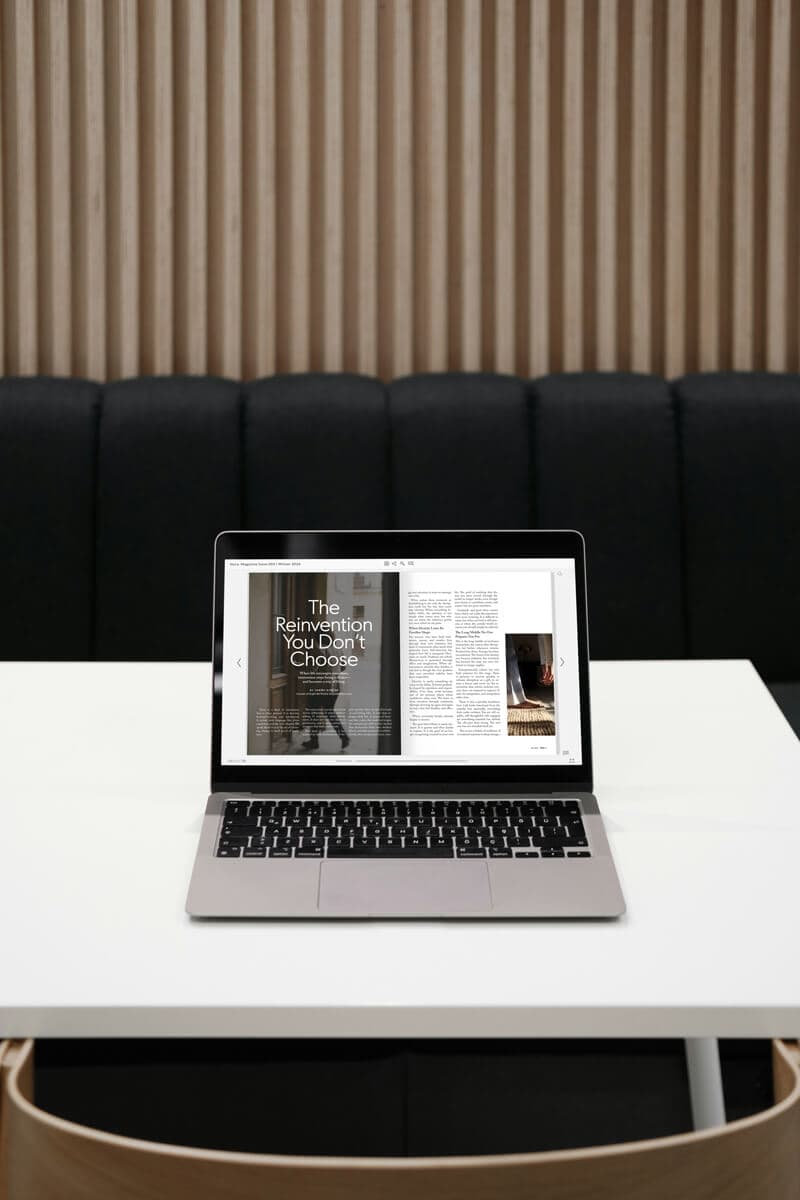
When Reinvention Isn’t a Choice: How to Navigate the Life Disruption No One Plans For
You’ve read the pivot stories. The founder who burned it down and rebuilt something better. The woman who left corporate, launched a business, and never looked back. Those stories are real, but they share something most people don’t name: the person chose them.
What almost nobody talks about is the other kind. The reinvention that arrives without your consent, without a motivational arc, and without a clear path forward. It doesn’t begin with a bold decision. It begins with a phone call, a diagnosis, a burnout so complete that the version of you who built everything simply cannot sustain it anymore.
In Issue 003 of Nora. Magazine, writer and entrepreneur Tammy Gibson writes about “The Reinvention You Don’t Choose”— from the inside. Her essay offers something rare: honest language for a season that most entrepreneurial culture doesn’t have patience for. This post is a starting point. Her full piece is where the real work is.
Table of Contents
- What Makes Unchosen Reinvention Different
- The Season Nobody Prepares You For
- What Returning Actually Looks Like
- When Your Business Has to Change Because Your Life Did
- Key Takeaways
- Meet the Contributor
- Why It Matters To Her
- Read the Full Article in Nora. Magazine
- Take Inspired Action
What Makes Unchosen Reinvention Different
The reinvention that gets celebrated in entrepreneurial culture tends to be strategic. Forward-looking. Chosen. It comes with language like pivot and next chapter—language that implies agency, momentum, a person at the wheel.
The kind that arrives uninvited moves entirely differently. It doesn’t wait for a convenient moment. It interrupts what already exists and asks you to navigate the aftermath before you’ve had time to process what happened. And the disruption isn’t just logistical. It reaches into identity—into the self-trust that women who build things tend to locate in their capacity to keep moving.
When that capacity is taken off the table, even temporarily, the question stops being what comes next and becomes something much harder to sit with.
The Season Nobody Prepares You For
There’s a specific stretch of unchosen reinvention that gets almost no airtime. It exists after the disruption itself, but long before coherence returns. Things are functional enough on the outside. Internally, everything is under revision.
Entrepreneurial culture has almost no patience for this stage. The pressure to reframe, recover, extract the lesson, and move forward is relentless. But disruption that arrives without your consent doesn’t respond to urgency. It asks for something slower, and most of the available advice isn’t built for that.
The loneliness of this season is its own thing. Not because support isn’t present, but because what’s happening is hard to explain, even to people who care. And when you can’t explain it, you stop trying. Which tends to make it harder.
Naming this season accurately, not as a failure of resilience, but as a natural response to deep change, is one of the most useful things you can do while you’re inside it.
What Returning Actually Looks Like
When Tammy eventually tried to return to her work, she assumed the transition would be straightforward. The skills were intact. The ideas were intact. On paper, nothing had disappeared.
What she found instead is the subject of her essay—and it’s not what most comeback narratives prepare you for. The question she sat with wasn’t about motivation or strategy. It was about fit: whether she was returning to her actual work, or forcing herself back into an identity that no longer matched the life she was living.
That distinction is worth your time. The full piece is where she works it through.
When Your Business Has to Change Because Your Life Did
One of the most honest things disruption surfaces is this: personal life and professional life are not actually separate, no matter how carefully we try to keep them that way. For entrepreneurs, especially, the business is an expression of the self, which means when the self changes, the business has to change with it.
This isn’t a problem to solve. It’s a reality to work with. Energy informs decisions. Capacity shapes availability. Values that shift through a hard season will eventually reshape strategy, too, and trying to hold the business to a prior version of yourself tends to cost more than letting it evolve.
Voice often changes in this season as well. After everything familiar has shifted, many women find they speak differently. Less interested in performance. More interested in what’s honest and sustainable. That’s not a loss of authority. It’s often where real authority begins.
Key Takeaways
- Unchosen reinvention doesn’t respond to urgency — it asks for integration, and integration has its own timeline regardless of the pressure to move faster.
- The long middle is real and it isn’t failure — the season between disruption and coherence is disorienting by nature; naming it accurately is the first act of navigation.
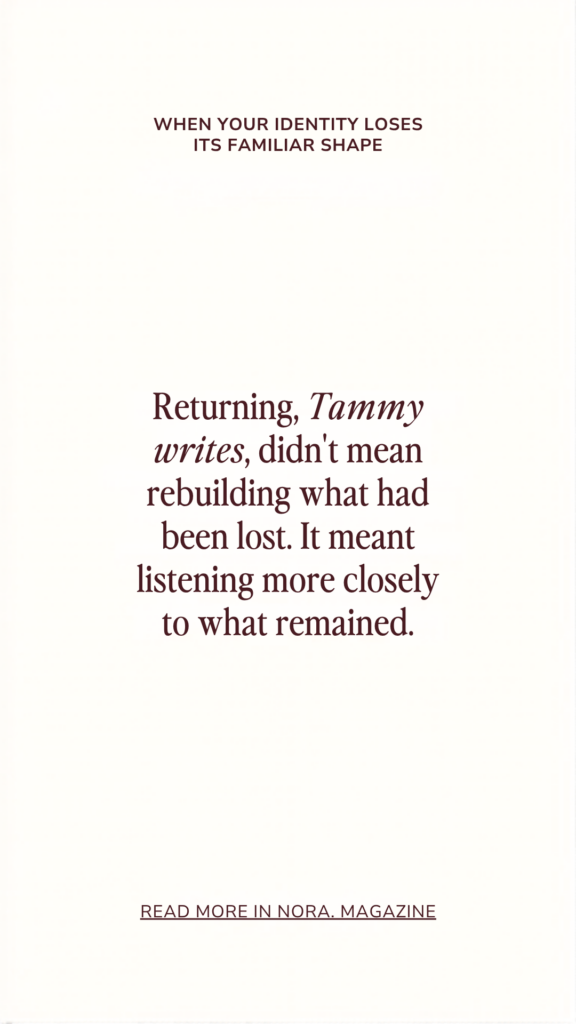
- Returning isn’t the same as rebuilding — the goal isn’t to reconstruct what was; it’s to listen closely to what remains, even when that answer is quieter than expected.
- Your business is a reflection of your life — when life changes substantially, the business must change with it; keeping them artificially separate costs more than it saves.
- A different kind of forward is still forward — stability built through unchosen reinvention is quieter than ambition, and often more durable.
Meet Our Contributor
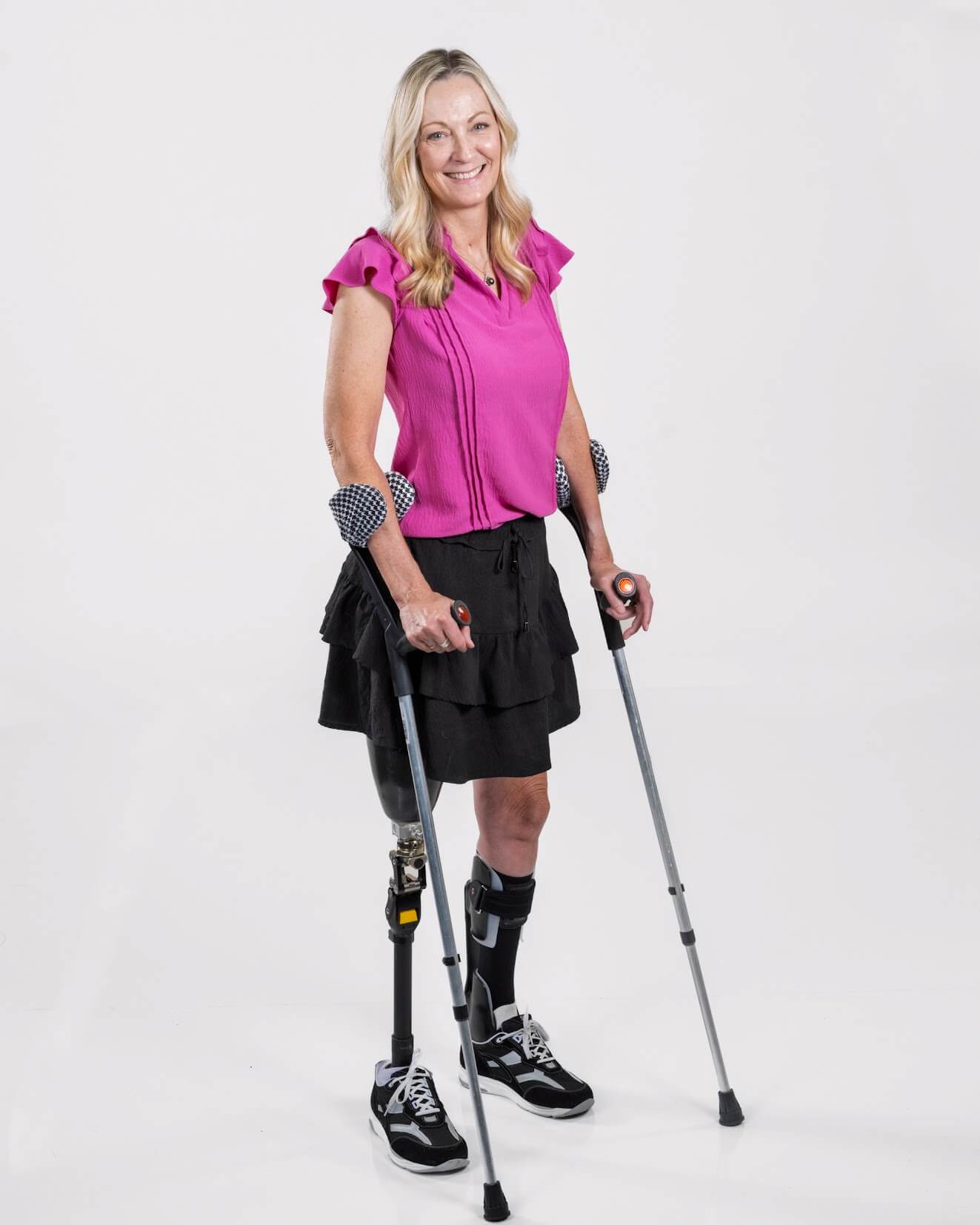
Tammy Gibson is a writer, keynote speaker, and entrepreneur with nearly two decades of experience building businesses and creative work online. After a sudden illness resulted in amputation and permanent physical disability, her work now centers on the idea of the comeback, and how women rebuild identity, capacity, and purpose after profound disruption. Tammy writes and speaks with the kind of earned honesty that only comes from having lived through what she’s describing, and her voice is a rare one in a space that too often skips the hard middle.
Why It Matters to Her
Tammy wrote this essay for women who are continuing without clear answers, and doing so with courage.
“This essay grew out of my own experience navigating a life interruption that reshaped how I work, create, and understand myself, and from a desire to offer language for a season many women quietly endure. It felt important to write about the courage it takes to continue without rushing toward resolution.”
Read the Full Article in Nora. Magazine
This post introduces the terrain. Tammy’s full essay in Issue 003 of Nora. Magazine is where the real depth lives—her own experience of unchosen reinvention, the specific shift that changed how she understood returning, and what she learned about identity, capacity, and building something that actually fits the life you’re living now. If you’re in a season like this one, her voice is worth finding. Read the full piece here →
Take Inspired Action
This week, take 15 minutes to write down the things about your work that still feel true—not aspirational, not who you used to be, but what genuinely remains. What still matters? What still fits? You don’t need to know where you’re going yet. But knowing what’s still yours is the ground you build from. Start there.


